Losing Fat Not Muscle: What Actually Works
Losing fat not muscle takes more than eating less. Learn how protein, training, recovery and GLP-1 planning help protect lean mass.
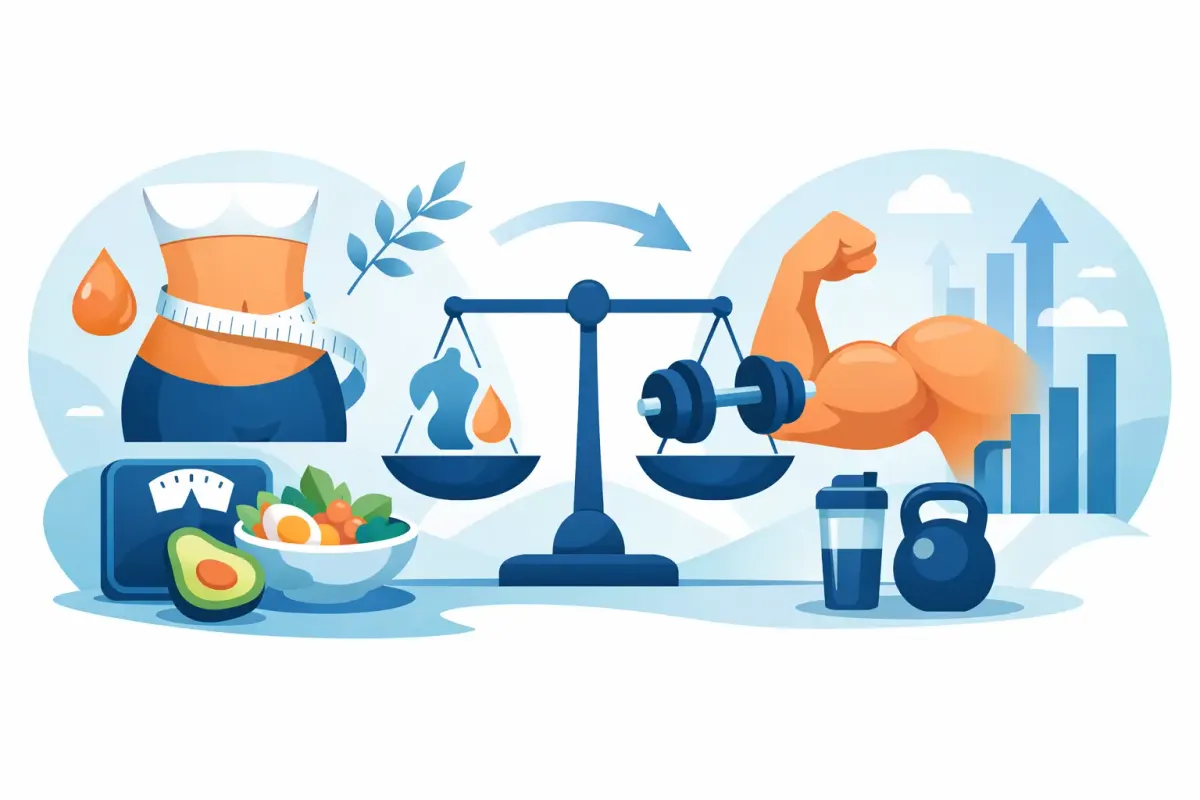
If the scales are dropping fast but your strength, energy, and shape are going backwards, something is off. Losing fat not muscle is the goal most people actually want, especially if you're improving metabolic health or using a doctor-guided weight-loss plan. The challenge is that your body does not automatically choose fat first. You need to give it a reason to hold on to muscle.
That matters for more than appearance. Muscle supports insulin sensitivity, physical function, resting energy use, and long-term weight maintenance. When too much lean mass is lost during dieting, people often feel weaker, flatter, hungrier, and more prone to regain. If you're using a GLP-1 medication, this deserves even more attention because a lower appetite can make it easy to under-eat protein and overall energy without realising it.
Why losing fat not muscle can be tricky
Fat loss happens when energy intake is lower than energy expenditure over time. That part is simple. What is less simple is how the body adapts to that deficit.
If calories drop too hard, protein intake is poor, and resistance training is missing, the body has less incentive to preserve muscle tissue. Rapid weight loss can include a mix of body fat, water, glycogen, and lean mass. Early changes on the scales may look encouraging, but they do not tell you what tissue you are actually losing.
This is where many people get caught. They assume that because weight is going down, body composition must be improving. Sometimes it is. Sometimes it is not. If your clothes fit differently in a good way, your strength is stable, and measurements are improving, that is a better sign than scale weight alone.
The core strategy for losing fat not muscle
Protecting muscle during fat loss is not about one perfect trick. It usually comes down to four basics done consistently: a sensible calorie deficit, adequate protein, regular resistance training, and enough recovery.
A sensible deficit is usually more effective than an aggressive one. Faster is not always better, particularly if it leaves you under-fuelled, fatigued, and unable to train properly. For many adults, a moderate pace gives the body a better chance of using stored fat while keeping performance and muscle retention more stable.
Protein is the second pillar. When you're in a calorie deficit, protein needs usually go up, not down. It helps preserve lean mass, supports recovery, and can improve fullness. Exact needs vary depending on body size, age, training load, and whether you're using an appetite-suppressing medication, but most people aiming for fat loss do better when they make protein a clear priority at each meal.
Resistance training is the strongest signal you can send your body that muscle is still needed. Walking, cycling, and general activity are excellent for health and energy expenditure, but they do not replace strength-focused work if muscle preservation is the goal. You do not need a bodybuilder program. You do need consistent training that challenges major muscle groups.
Recovery is often underrated. Poor sleep, very high stress, and relentless under-eating can make training quality worse and increase the risk of muscle loss. The best plan is one you can actually recover from.
Protein matters more than most people think
When appetite is low, protein is often the first thing to slip. Toast becomes a meal. Coffee replaces breakfast. Dinner gets smaller and smaller. That might reduce calories, but it can also reduce the amino acids your body needs to maintain lean tissue.
A practical approach is to build meals around a clear protein source first, then add fibre-rich carbohydrates and healthy fats around it. Eggs, Greek-style yoghurt, fish, chicken, lean meat, tofu, tempeh, cottage cheese, and protein-rich smoothies can all help, depending on your preferences and tolerance.
Distribution matters as well. Trying to cram most of your protein into one evening meal is usually less effective than spreading it across the day. For people struggling with reduced appetite, smaller protein-focused meals may be more realistic than large meals.
If you're on a GLP-1 and feeling full quickly, texture and convenience can make a difference. Softer, easier-to-eat options like yoghurt, protein smoothies, mince-based meals, or soups with added protein may be more manageable than large heavy plates. This is one of those situations where perfection is less important than consistency.
Strength training is your insurance policy
If you want your body to keep muscle, give it a reason. Resistance training does exactly that.
The goal is not to burn the most calories during the session. The goal is to maintain or build a signal that says, this tissue is still required. Basic compound movements such as squats, hinges, pushes, rows, and presses cover a lot of ground. Machines, free weights, cables, and bodyweight variations can all work if the effort is appropriate.
For many adults, two to four sessions per week is a realistic starting point. The key is progression and consistency, not punishment. If you are constantly exhausted, very sore, or struggling to recover because food intake is too low, your plan may need adjusting.
There is also a trade-off here. Doing large amounts of cardio while eating very little can push weight down quickly, but it may not be the best setup for muscle retention. Cardio still has value for heart health, fitness, and increasing daily energy expenditure. It just works best alongside, not instead of, resistance training.
GLP-1 medications change the fat-loss conversation
GLP-1 medicines can be useful tools under medical supervision, but they do not remove the basics of body composition. In some cases, they make those basics more important.
Because appetite often drops, total food intake can fall sharply. That can help with fat loss, but it can also create a setup where protein, strength training, hydration, and nutrient intake become too low. Some people end up eating so little that their weight falls, but they feel weak, cold, flat, and less capable in day-to-day life.
That is not the outcome most people are after. The aim is not just to be lighter. The aim is to improve metabolic health while protecting function and vitality.
If you're using a GLP-1, it's worth treating meals more strategically. Prioritise protein first. Keep up resistance training even if you're not chasing personal bests. Watch for signs that intake has become too low, such as persistent fatigue, dizziness, poor recovery, hair changes, or a clear drop in strength. This is where medically informed guidance is valuable, especially during the early adjustment phase.
Signs you're losing more than fat
The scales alone won't tell you if muscle loss is becoming a problem. A better question is what else is changing.
If your strength is dropping week after week, your muscles look noticeably smaller, your energy is poor, and your daily function feels worse, the deficit may be too aggressive or your protein and training setup may be inadequate. Rapid loss can also be misleading because some of it is water and glycogen, especially early on, but ongoing declines in performance deserve attention.
Body measurements, progress photos, gym performance, and how your clothes fit often give a clearer picture. If possible, body composition tracking can add context, although methods vary in accuracy. Trends matter more than one isolated reading.
Common mistakes that cost muscle
The most common mistake is simply eating too little for too long. People often assume that if a moderate deficit works, a very low intake will work better. In reality, it can increase fatigue, training drop-off, and lean mass loss.
The second is underestimating protein. The third is relying on walking alone and skipping resistance work because they are tired, busy, or uncertain where to start. The fourth is treating side effects, appetite suppression, or fast early scale changes as proof that the plan is working perfectly.
Sometimes the issue is not effort. It is plan design. A structured approach usually beats a harsh one.
What a better week looks like
A good fat-loss week does not need to look extreme. It usually means eating enough protein across the day, doing a few solid strength sessions, staying generally active, and keeping the calorie deficit moderate enough that you can still recover.
It may also mean adjusting expectations. If weight loss slows slightly while strength holds and your waist measurement improves, that is often a better outcome than dramatic scale drops with obvious muscle loss. Sustainable body composition change can look less exciting week to week, but it tends to age better.
For NZ readers trying to cut through online noise, that is the bigger point. The smartest fat-loss strategy is rarely the most aggressive one. It is the one that protects the parts of your health you will still care about six months from now.
If you're serious about changing your body without undermining your metabolism, think beyond lighter. Aim for stronger, better-fuelled, and easier to maintain.