Protein Support for GLP-1 Users
Protein support for GLP-1 users can help protect muscle, improve recovery and make fat loss more sustainable during treatment.
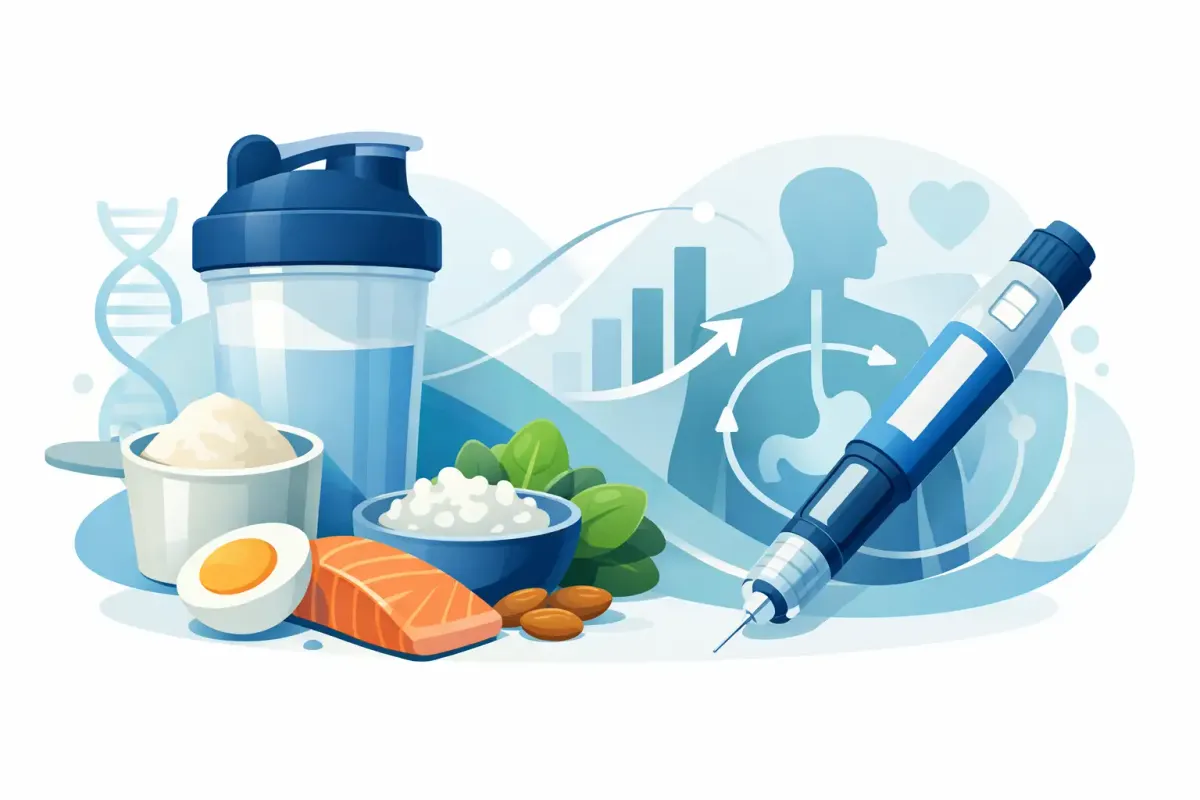
When appetite drops fast, nutrition mistakes get easier to make. That is why protein support for GLP-1 users matters early, not just once weight loss is already underway. If you are eating less on a medication such as semaglutide or tirzepatide, the goal is not simply to eat fewer calories. It is to lose fat while giving your body enough protein to help protect lean mass, support recovery and keep progress sustainable.
GLP-1 medications can be highly effective for appetite control and weight reduction, but they also change how eating feels. Meals may become smaller, hunger cues can quieten, and some foods may suddenly feel unappealing. That can help with energy intake, but it also creates a practical problem. If total food intake falls too far, protein often falls with it.
Why protein support for GLP-1 users matters
During weight loss, your body does not only draw on fat stores. Without enough protein, and without some form of resistance training, you can also lose lean tissue. That includes muscle. For many adults, especially those in midlife and beyond, that trade-off matters. Muscle supports strength, function, metabolic health and long-term weight maintenance.
This is one of the most overlooked parts of medically supported fat loss. The medication may reduce appetite very effectively, but it does not automatically guarantee good nutrition. In some people, nausea, fullness or food aversion can make protein-rich meals harder to tolerate than lighter, lower-protein foods. Toast may go down easily. Greek yoghurt, eggs or chicken may not always feel as appealing.
That does not mean your plan is failing. It means your nutrition strategy needs to catch up with your new appetite.
How much protein do GLP-1 users actually need?
There is no single number that suits everyone. Your needs depend on body size, age, activity levels, training, overall calorie intake and medical context. But for adults trying to lose fat while preserving lean mass, protein needs are often higher than many people expect.
A useful general target is to make protein a clear feature of every meal rather than treating it as an afterthought. For some people, that may mean aiming for roughly 25 to 35 grams per meal across the day. Others may need more or less depending on total intake and individual goals. If you are older, physically active, or deliberately trying to protect muscle while losing weight, the margin for under-eating protein becomes smaller.
This is where medical and dietetic guidance can be helpful. A person on a low appetite, small portions and rapid weight loss may need a more intentional plan than someone using a lower dose with fewer side effects.
The main challenge: low appetite and early fullness
Most people do not struggle with protein because they do not know it matters. They struggle because protein can feel hard to eat when they are already full after a few mouthfuls.
GLP-1 medications slow gastric emptying and reduce appetite signalling. That can be useful, but it changes meal tolerance. Larger serves of meat, dense meals and rich foods may sit heavily. If you are trying to force a big steak into a body that clearly does not want it, you will probably lose that battle.
A better approach is to think smaller, earlier and simpler. Smaller portions eaten consistently tend to work better than waiting until the evening and trying to catch up. Many people tolerate protein best earlier in the day, before nausea or fullness builds. Soft, easy options can also be more realistic during the adjustment phase.
Practical protein support for GLP-1 users
The most effective strategy is usually not dramatic. It is consistent.
Start by anchoring each meal around an easy protein source. That might be Greek yoghurt, cottage cheese, eggs, tuna, chicken, tofu, protein-fortified milk or a simple smoothie. If full meals feel like too much, split intake across three smaller meals and one protein-focused snack. This often works better than aiming for traditional large breakfast, lunch and dinner portions.
Texture matters as well. During periods of nausea or reduced appetite, softer foods may be easier than dry or chewy ones. Yoghurt, scrambled eggs, soups with added protein, smoothies and softer fish can be more manageable than dense cuts of meat. Cold foods also suit some people better than hot meals when side effects are active.
Protein supplements can help, but they should support the diet rather than replace it entirely. A well-tolerated protein shake can be useful on days when food intake is low, after training, or during the first few weeks of dose escalation. Still, whole foods bring other benefits, including micronutrients, satiety and better eating patterns. If shakes become the only reliable source of nutrition, it may be worth reviewing whether side effects are being managed properly.
Best food choices when appetite is low
Not all protein foods are equally practical on GLP-1 treatment. Lean, simple options often work best because they are easier to portion and less likely to feel overly heavy.
Eggs are a common starting point because they are versatile, soft and usually easy to digest. Greek yoghurt is another strong option, especially for breakfast or a small snack. Chicken, tinned fish, tofu, edamame, protein oats and milk-based smoothies can also be useful. Some people do well with mince-based meals because the texture is easier than whole cuts of meat.
The right choice depends on what you can actually tolerate. Someone with strong nausea may do better with half a tub of yoghurt than a carefully planned chicken salad. That is not a nutritional failure. It is adaptation. The key is to keep protein intake moving in the right direction, even if the form changes from day to day.
When a protein powder makes sense
There is a lot of hype around supplements, but this is one area where a simple product can be genuinely practical. If your appetite is suppressed and your meals are small, protein powder can help you close the gap without requiring a large food volume.
That said, more is not automatically better. A shake that causes bloating, feels too sweet or replaces all normal eating is not solving the real issue. Look for a product you tolerate well, use it to support intake on lower-food days, and pay attention to the rest of your diet. Some people prefer whey-based powders, while others do better with dairy-free options. It depends on digestion, taste and tolerance.
If you have kidney disease, complex medical needs, or very low calorie intake, supplementation should be discussed with your treating clinician or dietitian.
Protein is only half the muscle-protection plan
If your goal is to protect muscle while losing fat, protein matters, but it does not work alone. Resistance training is the other half of the equation.
That does not mean you need to train like an athlete. Two to four sessions per week of sensible strength work can make a meaningful difference. Bodyweight movements, machines, dumbbells or supervised training can all be effective. The point is to give your body a reason to keep the muscle you want to hold onto.
This matters even more for people losing weight quickly. A lower body weight on the scales can look like success, but if a large share of that loss comes from lean tissue, long-term outcomes may not be as strong as they seem.
Signs your protein intake may be too low
Sometimes low protein is obvious. Sometimes it is hidden behind decent weight loss. If you are feeling unusually weak, struggling to recover from exercise, noticing declining strength, feeling flat between meals, or consistently eating very small, low-protein foods, it is worth reviewing your intake.
Hair changes, poor recovery and difficulty meeting training targets can also be clues, although they are not specific to protein alone. The broader point is simple. Rapid appetite suppression can make under-eating look normal.
For readers following a medically supervised plan, this is where structured check-ins matter. Clinically informed fat loss is not just about dose progression. It is about whether your nutrition still matches your goals.
A smarter way to think about progress
The best outcomes on GLP-1 treatment usually come from a shift in focus. Rather than asking, "How little can I eat?" ask, "How do I make smaller meals work harder for me?"
That is the role of protein support for GLP-1 users. It helps protect what matters while the medication helps reduce what does not. Better body composition, better strength retention and a more stable path through treatment usually come from strategy, not just appetite suppression.
If eating is harder than expected, simplify before you give up. Make protein easier to tolerate, spread it across the day, and pair it with some form of strength work. That is often the difference between fast weight loss and well-supported fat loss.
Your appetite may be smaller now, but your body still needs support.