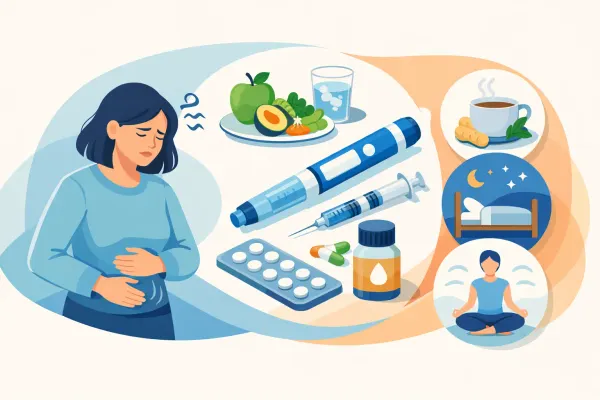
Muscle Loss on GLP-1: What to Watch
Worried about muscle loss on GLP-1? Learn why it happens, how to reduce the risk, and what to focus on for safer, stronger fat loss.
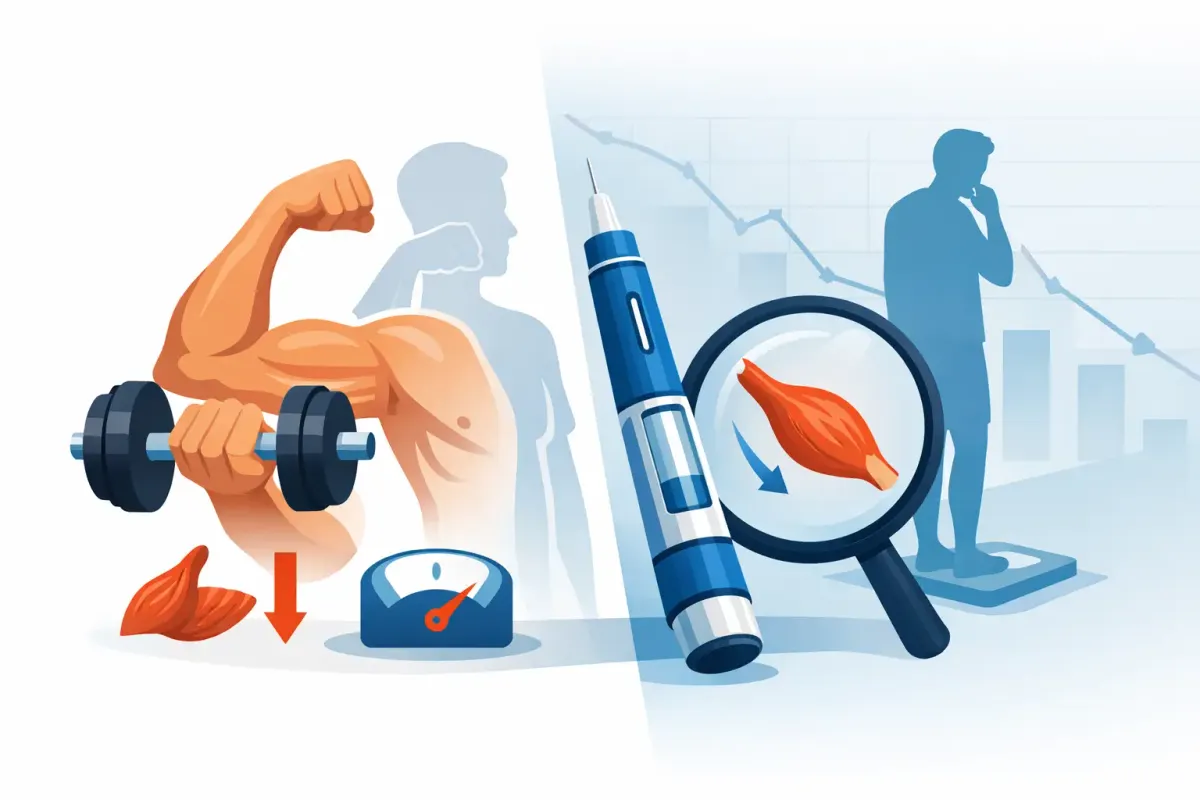
A fast drop on the scales can feel encouraging - until you realise not all weight loss is body fat. Muscle loss on GLP-1 is one of the biggest concerns people raise when they start treatment, and it is a fair one. If appetite drops sharply, protein intake falls, and strength training disappears, the body can lose lean mass along with fat.
That does not mean GLP-1 medicines are the problem on their own. It usually means the weight-loss process is moving faster than the body is being supported. The goal is not just a lower number on the scales. It is better metabolic health, lower body fat, and as much muscle preservation as possible.
Why muscle loss on GLP-1 can happen
GLP-1 medications help reduce appetite, slow gastric emptying, and make it easier for many people to eat less. That can be useful, especially when previous attempts at fat loss have felt like a constant battle with hunger. But eating less creates a trade-off. If overall energy intake drops too low, the body does not only pull from fat stores.
Muscle tissue is metabolically active, and during any period of weight loss there is usually some reduction in lean mass. This is not unique to GLP-1 treatment. It happens with calorie restriction in general. What changes on GLP-1 is that people may accidentally undereat by a wide margin, particularly in the early adjustment phase when nausea, fullness, or food aversion are stronger.
There is also a practical issue. When appetite is low, protein-rich meals can feel harder to finish than snack foods or fluids. Some people end up eating very small amounts, skipping meals, or relying on whatever feels easiest. Over time, that can leave muscle underfed.
How much muscle loss is normal?
Some lean mass loss during weight reduction is expected. The key question is whether the proportion is reasonable and whether you are actively reducing the risk. A person losing body fat while maintaining strength, function, and a good level of protein intake is in a very different position from someone dropping weight rapidly while feeling weaker, flatter, and less capable in the gym or during daily tasks.
Body composition changes are not always obvious from the scales alone. If your body weight is falling but your strength is stable, your clothes fit better, and you are recovering well, that suggests a better quality of weight loss. If weight is falling and so is your strength, energy, and physical resilience, it is worth paying attention.
This is where expectations matter. The aim is not perfection. The aim is to keep muscle loss as low as possible while improving fat loss and metabolic markers.
Signs you may be losing too much muscle
The warning signs are often practical before they are visible. You may notice your lifts dropping, daily activities feeling harder, or a general sense of weakness that is new. Some people describe feeling "smaller" but not necessarily stronger or healthier.
A few clues can point to a problem. Rapid weight loss, very low protein intake, little or no resistance training, prolonged nausea, and persistent meal skipping all increase the risk. Older adults should be especially careful, because muscle loss can happen more quickly and has bigger consequences for mobility, balance, and long-term health.
If you are unsure, this is a good reason to speak with your prescribing clinician or dietitian rather than guessing. A short course correction early on is easier than trying to rebuild muscle after months of under-eating.
How to reduce muscle loss on GLP-1
The most effective strategy is usually not dramatic. It is consistent. Protecting muscle during GLP-1 treatment comes down to three foundations: enough protein, regular resistance training, and a rate of loss that your body can tolerate.
Prioritise protein even when appetite is low
Protein is the first place to focus because it provides the raw material your body needs to maintain lean tissue. If full meals feel difficult, smaller protein-focused meals can be easier to manage than large plates. For some people, breakfast is the best chance to get a solid protein intake before fullness builds across the day.
Soft or simple options can help during the adjustment phase. Think yoghurt, eggs, cottage cheese, protein smoothies, tofu, fish, or tender chicken. The exact foods matter less than consistency. If you are only eating tiny amounts, every eating opportunity needs to work harder for you.
People often ask for a perfect target. It depends on body size, age, activity, and total calorie intake, but most adults trying to preserve muscle during fat loss benefit from making protein a non-negotiable part of each meal. If you are on a GLP-1 and struggling to eat enough overall, this becomes even more important.
Keep doing resistance training
If you want your body to keep muscle, you need to give it a reason. Walking is excellent for general health and energy expenditure, but it does not replace resistance training when the goal is muscle retention. Strength work sends the clearest signal that lean mass is still needed.
This does not require a bodybuilder programme. Two to four sessions per week of progressive resistance training is enough for many people. Machines, free weights, bands, and bodyweight can all work if the exercises are challenging and repeated consistently.
The big mistake is waiting until motivation appears. During GLP-1 treatment, appetite may be reduced whether you train or not. Without some form of strength stimulus, the body has less reason to hold onto muscle while weight is falling.
Avoid chasing the fastest possible loss
Quick results can be tempting, especially if treatment finally feels effective after years of frustration. But a more aggressive calorie deficit is not always better. When food intake drops too hard, fatigue rises, training quality falls, and muscle retention becomes more difficult.
A steadier pace is often better for long-term body composition. This is one of those areas where patience pays off. Slower progress with more strength is usually a better outcome than rapid loss paired with weakness and rebound risk.
Nutrition matters beyond protein
Protein gets most of the attention, but overall nutrition still counts. If your diet quality collapses because you are eating very little or relying on random convenience foods, recovery and training will suffer. Hydration, fibre, and adequate micronutrients all matter during treatment.
Some people also benefit from meal structure instead of eating purely by appetite. That can sound counterintuitive on a medication designed to reduce hunger, but relying only on hunger cues may leave you under-fuelled. Planned meals can help keep intake steady enough to support muscle and daily function.
If side effects are making this difficult, the issue may not be willpower. It may be dose timing, food choices, escalation speed, or the need for medical review.
Who needs to be extra careful?
Muscle loss on GLP-1 deserves closer attention in older adults, people with low baseline muscle mass, and anyone eating very little because of side effects. It also matters for those who are already dieting hard, doing large amounts of cardio, or skipping strength training entirely.
People with a history of weight cycling can also be vulnerable. Repeated loss and regain can make body composition harder to manage over time, especially if prior diets led to muscle loss. In that setting, protecting lean mass should be part of the plan from day one, not something you think about after the weight is gone.
What to ask your clinician
If you are concerned, ask practical questions. Is your rate of loss appropriate? Are side effects pushing your intake too low? Should your protein target, training plan, or dose strategy be adjusted? If you have access to body composition monitoring, it may offer more insight than body weight alone.
The best GLP-1 outcomes usually come from combining medication support with a muscle-protection strategy. That is the difference between simply eating less and actually improving metabolic health.
For many New Zealand adults, the smartest path is not extreme. It is structured, supervised, and sustainable. If your treatment is helping with appetite control, use that window well - eat enough protein, keep lifting, and make your progress something your body can maintain. At Metabolic Flow, that is the version of weight loss worth aiming for.